
Stop 50 of 58, North America
Chichén Itzá
Mexico · Mexico & Central America
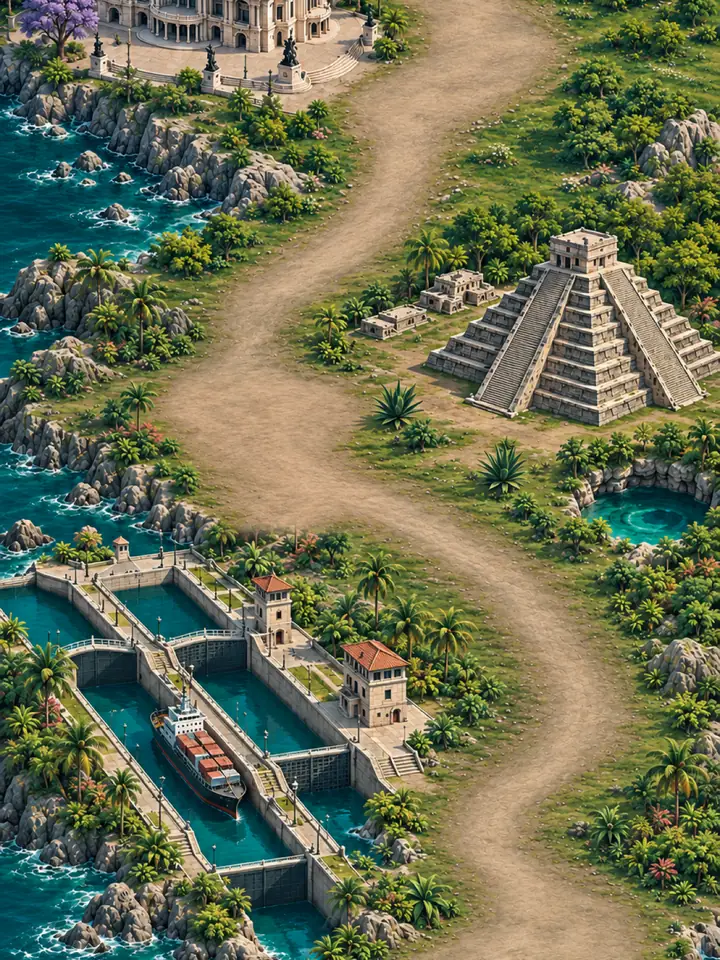
Chichén Itzá was one of the largest Maya cities, in today’s Yucatán state. Its pyramid, El Castillo, has about 91 steps on each side; with the top platform, that may make 365, the days of the year. At the equinoxes, shadows look like a serpent wriggling down the stairs.
- Country
- Mexico
- Region
- Mexico & Central America
- Built by
- The Maya
- Pyramid
- El Castillo
Try a Chichén Itzá question
Where did a giant asteroid strike near Yucatán?
The tour starts in Reykjavík.
A short history
The name Chichén Itzá means “at the mouth of the well of the Itzá”. The city mixed local Puuc and Chenes building styles with central Mexican, Toltec-linked ideas. The Temple of the Warriors is similar to Temple B at the Toltec capital of Tula. Chichén Itzá declined as a regional centre by 1100. UNESCO made it a World Heritage Site in 1988, and in 2007 it was named one of the New Seven Wonders of the World.
Worth seeing
The Great Ball Court measures 168 by 70 metres. Stone rings on its walls are carved with intertwined feathered serpents. Clap your hands beside El Castillo’s staircase and the echo sounds like a bird’s chirp, similar to the call of the quetzal.
Nearby stands the Temple of the Warriors, a stepped pyramid with rows of carved columns showing warriors. A Chac Mool statue sits at the top of its stairway.
Did you know?
- The round building called El Caracol is thought to have been a simple observatory, with alignments tied to Venus.
- The Sacred Cenote was a place of pilgrimage, used for offerings during droughts.
- Tourists from the Cancún resorts often visit on day trips by tour bus.
Find it on the map
Find the Yucatán Peninsula in southeast Mexico. Chichén Itzá lies in the Tinúm municipality of Yucatán state, between the cities of Valladolid and Mérida. Tour buses bring day-trippers here from the resorts of Cancún.