
Stop 56 of 58, North America
Banff
Canada · Canada
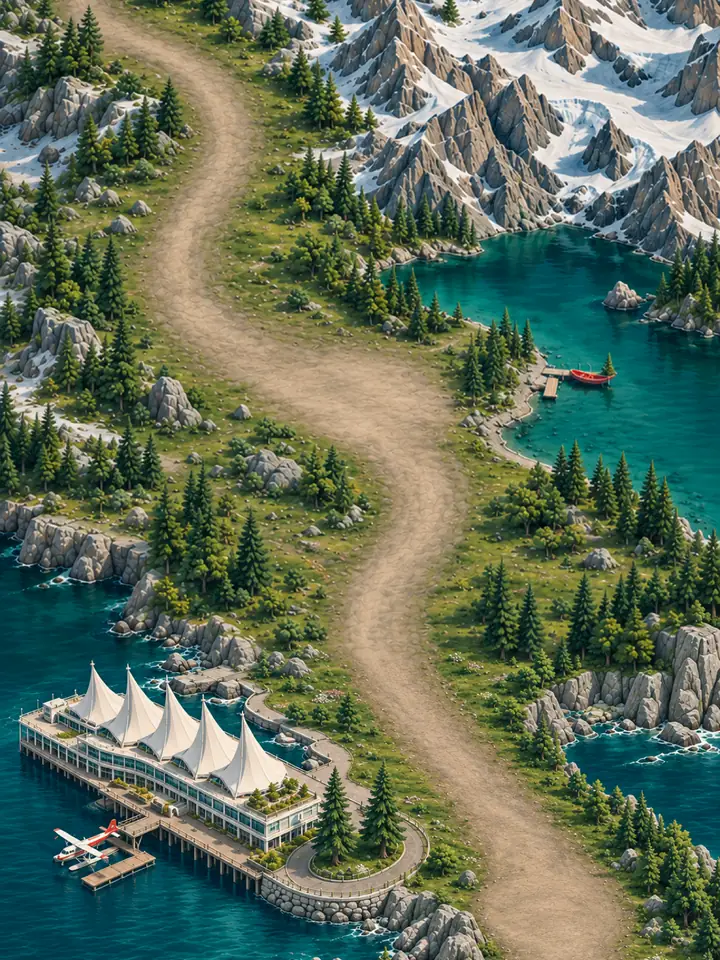
Banff is Canada’s first national park, founded in 1885 around the Cave and Basin hot springs. Lake Louise gets its turquoise colour from rock flour that meltwater carries down from the glaciers. Elk are common in the valleys and sometimes wander into town.
- Country
- Canada
- Region
- Canada
- Park since
- 1885
- Lake colour
- Glacial rock flour
Try a Banff question
Where does the Icefields Parkway end in the north?
The tour starts in Reykjavík.
A short history
Railway workers found the hot springs at Cave and Basin in 1883, and the discovery drew the government’s interest. The Canadian Pacific Railway then built the Banff Springs Hotel and Chateau Lake Louise to attract tourists. In 1984 UNESCO named Banff, together with its neighbouring parks, the Canadian Rocky Mountain Parks World Heritage Site.
Worth seeing
Lake Louise is a hamlet about 54 kilometres northwest of the town of Banff. Chateau Lake Louise is there. About 15 kilometres farther on is Moraine Lake, with views of the Valley of the Ten Peaks.
In the town itself, the Bow River flows right through, and Bow Falls lie on its outskirts.
Did you know?
- The park covers 6,641 square kilometres.
- The town of Banff sits at about 1,384 metres above sea level.
- The Icefields Parkway is 230 kilometres long and links Lake Louise to Jasper.
Find it on the map
Look at the Rocky Mountains in the Canadian province of Alberta. Banff town is about 128 km west of Calgary by road, along the Trans-Canada Highway. The Bow River flows through the town. Jasper National Park lies just to the north, and Yoho National Park to the west.