
Stop 19 of 58, Africa
Serengeti
Tanzania · East Africa
The Serengeti spreads across northern Tanzania and into Kenya. Each year more than a million wildebeest follow the rains around it, with hundreds of thousands of zebras and gazelles. Its name is often said to come from a Maa word for “endless plains”.
- Country
- Tanzania
- Region
- East Africa
- Migration
- 1 million+ wildebeest
- World Heritage
- Since 1981
Try a Serengeti question
Where is the big crater next door that teems with wildlife?
The tour starts in Reykjavík.
A short history
In 1930 Major Richard Hingston proposed turning the Serengeti Game Reserve into a national park. It became one in 1940, though the borders were not settled until 1951. Strict protection began in 1948. In 1959 about 8,300 square kilometres in the east were split off as the Ngorongoro Conservation Area, to make room for Maasai land use. The Serengeti Research Institute opened at Seronera in 1966 to study the great migration.
Worth seeing
The migration is the big show. Herds loop clockwise through the park toward Kenya’s Maasai Mara. From July, crossings of the Grumeti and Mara rivers draw visitors, because Nile crocodiles wait in the water. The dry season, June to October, is the best time to go.
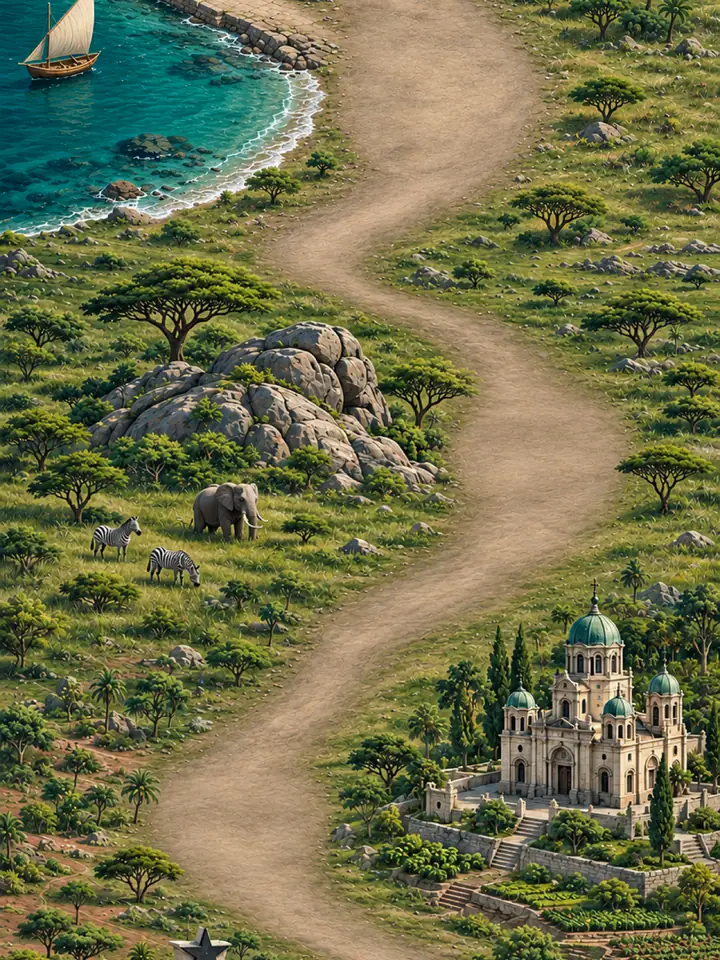
Look for the kopjes, which are granite outcrops. Predators use them as lookout posts over the plains. Just to the south-east, in the Ngorongoro Conservation Area, Olduvai Gorge is where some of the oldest hominin fossils were found.
Did you know?
- About 500,000 wildebeest calves are born in February.
- The migration loop is about 800 kilometres long.
- The park has over 500 bird species.
Find it on the map
Find Lake Victoria in East Africa, then look east of it. The Serengeti covers northern Tanzania and reaches the Kenyan border, where it joins the Maasai Mara. The Ngorongoro Conservation Area lies to the south-east. The Grumeti River flows west from the park to Lake Victoria.